Papertrade2026-10-17 09:31:07Papertrade’s $42.24 Million 7-Day Revenue Puts Focus on Loss-Driven PAPER RewardsPapertrade, a synthetic perpetuals platform built on Hyperliquid’s HyperEVM, has posted one of the fastest revenue ramps seen in crypto this month. DefiLlama data cited in the source article shows the protocol generated $42.24 million in revenue over the past seven days, placing it third across the industry behind Tether and Circle, and ahead of Pump.fun and Hyperliquid during the same period. The platform’s model ties traders’ realized losses to the minting of its native PAPER token, which can then be staked for USDC distributions. That design has pulled in heavy volume, but it also means a large share of protocol revenue is closely linked to what traders lose rather than to conventional exchange fees alone. The article details how Papertrade works, why hedged volume farming can still produce real losses under its Asymmetric PnL design, and how early users gained a strong advantage through higher token issuance rates and early staking access. It also points to on-chain figures from Lookonchain, Odaily, TradingBeats, The Block and DefiLlama showing steep liquidation activity, sharply front-loaded rewards, and a revenue mix dominated by liquidity pool surplus distributions. The core question raised is whether Papertrade can keep generating income once token incentives fade and whether genuine trading demand can replace incentive-driven activity over time.100
Papertrade2026-10-17 09:09:51How Papertrade Turns Trader Losses Into Protocol Revenue and Why Late Users May Get SqueezedPapertrade, a synthetic perpetuals platform built on Hyperliquid’s HyperEVM, has climbed near the top of crypto’s revenue rankings just days after launch. DefiLlama data cited in the source article showed the protocol generated $42.24 million in revenue over seven days, trailing only Tether and Circle and outpacing both Pump.fun and Hyperliquid over the same period. The model behind that growth is unusual: traders can mint PAPER tokens by taking eligible realized losses, then stake those tokens to earn a share of future USDC distributions. That structure creates a very different set of incentives from those seen on traditional perpetual DEXs. Because Papertrade uses a protocol liquidity pool as the counterparty and applies an asymmetric profit-and-loss mechanism, traders can still lose money even when they hedge market direction. The article also points to high leverage, liquidation risk, issuance decay, and token dilution as key reasons why early participants may fare much better than users who arrive later. Drawing on data and examples cited from Lookonchain, Odaily, DefiLlama, TradingBeats, and The Block, the piece examines how Papertrade’s revenue is formed, why some whales were able to offset trading losses with staking rewards, and what may determine whether the model can hold up over time.100
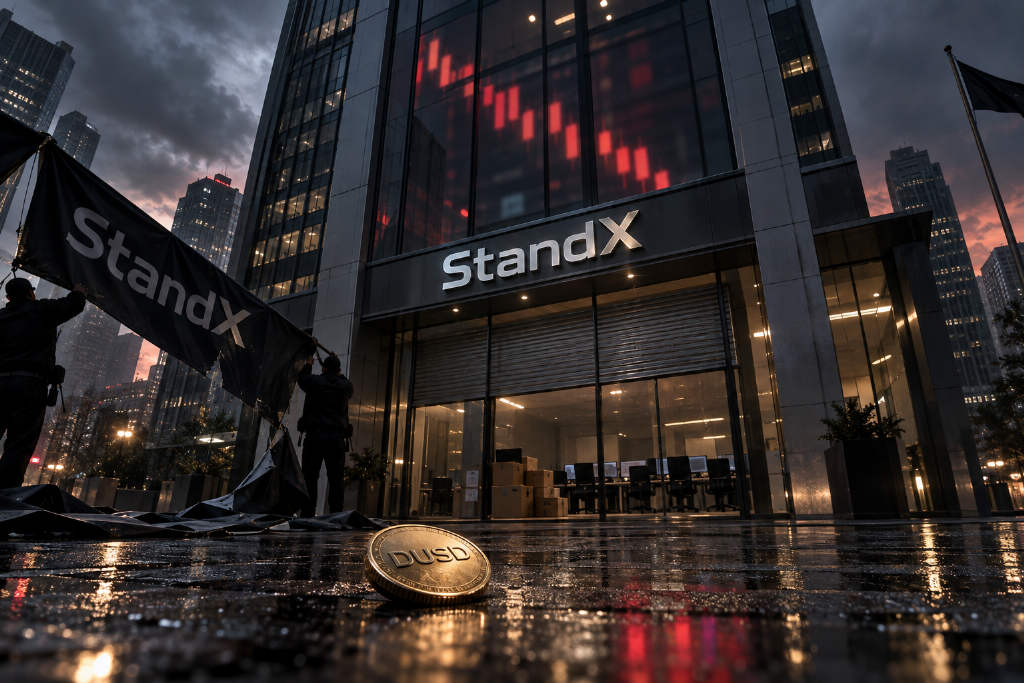
StandX2026-10-15 07:36:00StandX scraps TGE and winds down operations despite rapid growth in perpetual DEX tradingStandX has chosen to shut down before its token generation event, an unusual decision at a time when perpetual decentralized exchanges remain one of crypto’s busiest sectors. The project had expanded from its yield-bearing stablecoin DUSD into a perpetual futures venue and posted strong growth in 2026, including about $158 million in single-day perp volume in January, open interest rising from roughly $25 million to more than $100 million after the launch of Position Yield in April, and an official July update citing around 235,000 users and $700 million in daily trading volume. According to the article by Biteye, the team understood the economics facing mid-tier perp DEX platforms: keeping liquidity competitive requires ongoing spending on market makers, maker incentives, points programs, rebates and airdrop expectations, while StandX had no VC backing and relied on team capital. To address community concerns after canceling the token, StandX said it will distribute a one-time DUSD airdrop with no lock-up, covering historical activity including pre-deposit participation, Alpha and Mainnet trading, market making and referrals. The project said remaining revenue will be used for the airdrop, with additional team funding added on top. Eligibility checks open on Oct. 26, claiming starts on Nov. 1, and the window closes on Dec. 31.30
StandX2026-10-15 07:10:00StandX scraps token launch after pre-market valuation nears $350 million, moves to DUSD airdrop and wind-downStandX, a perpetual futures DEX that drew early attention because of its founding team’s Binance derivatives background, has canceled its token launch and started winding down operations just days after its pre-market debut on Aspecta pushed its implied fully diluted valuation close to $350 million. The project said it will distribute a one-time DUSD airdrop to the community instead of issuing a token, while trading services will be phased out on a set timetable. The reversal came after months of delayed roadmap targets, sparse communication from co-founders, repeated changes to the platform’s points system, and growing pressure from rival projects that completed token generation events or offered clearer incentives. According to DefiLlama data cited in the report, StandX’s TVL fell from a peak of $107 million in January to about $22.8 million on Oct. 15, while open interest dropped from a high of $72.1 million to $13.6 million. Its 30-day volume still reached $11.17 billion, but the report says much of that activity was driven by incentive design rather than sticky capital. StandX said it had served more than 237,000 users, reached TVL above $200 million at its peak, and suffered no security incidents during operations. Query for the airdrop opens on Oct. 26, claims run from Nov. 1 through Dec. 31, and the platform’s perpetuals product will shift to reduce-only mode on Oct. 20.30
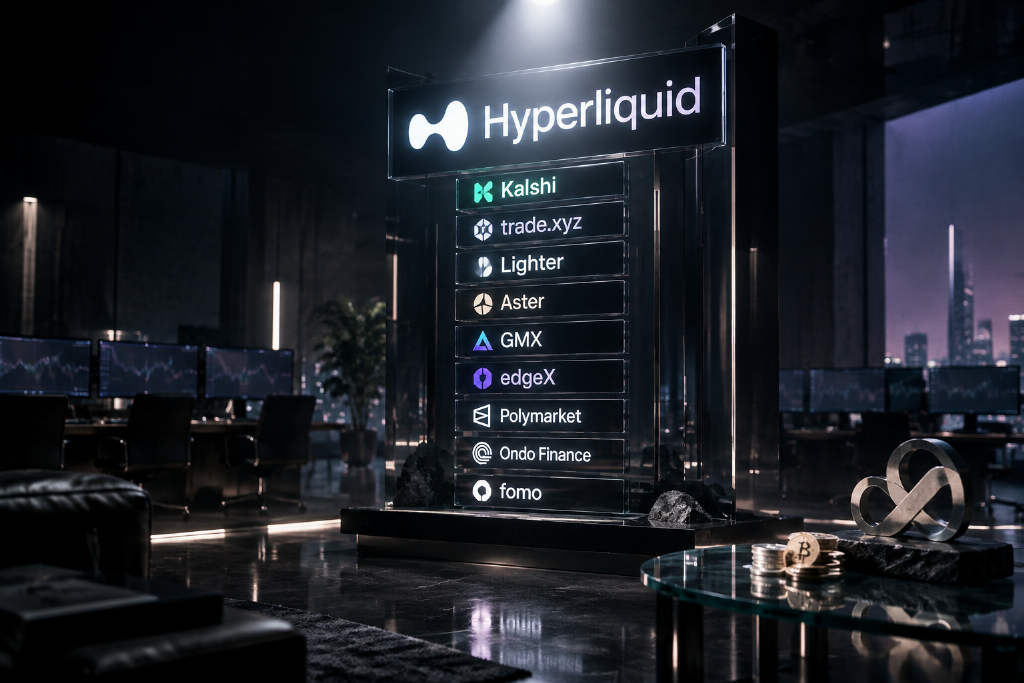
Perpetual DEX2026-10-12 07:40:06Hyperliquid tops 7-day perpetual DEX notional volume ranking with $48.1 billionOdaily reported that Hyperliquid led the ranking of perpetual decentralized exchanges by notional trading volume over the past seven days, posting $48.1 billion. Kalshi ranked second with $14.9 billion, followed by trade.xyz at $12.2 billion. Lighter and Aster recorded $11.7 billion and $10.8 billion, while GMX reached $8.8 billion. The rest of the list included edgeX with $6.4 billion, Polymarket with $4 billion, Ondo Finance with $1 billion, and fomo with $853 million. The ranking covers the past seven days and lists 10 platforms by reported notional volume.270
TOKEN20492026-10-10 05:31:23TOKEN2049 Takeaways: Fewer Builders, More Institutions, and a Shift Toward Real BusinessAttendees at TOKEN2049 in Singapore came away with a mixed but increasingly consistent read on where crypto is heading. The event still felt crowded and socially dense, yet many participants said the number of genuinely new projects was down, while institutions, traders, KOLs and capital allocators were far more visible than in prior years. Across conversations on the main floor and at side events, the center of gravity appeared to move away from pure narrative and toward products with users, revenue, assets and liquidity. Several themes dominated the conference. Stablecoins, payments, real-world assets, perpetuals, prediction markets and privacy were repeatedly cited as the most active areas. AI and decentralized AI remained a major focus for builders, even as some attendees said the main venue itself looked increasingly like a traditional finance expo. Others pointed to a widening split between online sentiment and offline dealmaking, arguing that social media remains driven by price action and anxiety while in-person meetings are still where trust, partnerships and practical information are formed. The collection of attendee notes also highlighted a more selective market. Some investors were described as neutral or bearish, holding cash and concentrating into only a few positions. At the same time, participants said the industry is asking harder questions: where users come from, who earns the revenue, what value token holders capture, and whether tokenized assets are actually being used on-chain. In that sense, the conference reflected a broader turn in crypto from storytelling toward execution.230
TOKEN20492026-10-09 09:05:37At TOKEN2049, Crypto Talk Shifted From Narratives to Revenue, Users and Value CaptureA field note from Foresight News writer Joe Zhou argues that the tone at this year’s TOKEN2049 in Singapore was notably different from prior editions. Instead of leaning on broad themes such as decentralization ideals, the metaverse, or mass adoption, many founders and operators were talking in hard numbers: the number of countries where QR-code payments are live, how many users actually paid with stablecoins in the past month, average monthly payment amounts, and annualized returns from trading strategies. In Zhou’s account, the central question on and off the conference floor was no longer which narrative sounds biggest, but where users are, how revenue is generated, and who ultimately captures the value. The article also highlights “value capture” as the phrase heard most often at the event. Zhou cites conversations ranging from a stablecoin CEO to a secondary-market fund founder and a growth lead at a major prediction market, all focusing on whether network activity, payment flows, or API usage can turn into durable revenue and profits. He argues that exchanges, stablecoins, public chains and DeFi, perpetual DEXs, and prediction markets are emerging as five business lines in crypto with clearer demand and business logic. At the same time, he warns that the industry still repeats old habits, especially the rush to launch new chains, and says Agent Payment remains an example where the story may be running ahead of commercial reality.230
Variational2026-09-25 10:18:56Variational unveils tokenomics and airdrop plan, putting the spotlight on what each point may be worthVariational, a perpetual DEX protocol, has released its preliminary tokenomics and genesis airdrop structure, giving users their first official look at how VAR will be distributed at TGE. The plan allocates 32% of total supply to the genesis airdrop, 18% to an ecosystem reserve held by the Variational Foundation, and 50% to the team and investors, with the latter portion locked for 12 months after TGE and then vesting over at least three years. The protocol also said 100% of revenue flowing to the treasury will be used to buy back and burn VAR. For users farming points, the bigger update is that the points program will continue until TGE rather than ending in the third quarter. Variational said the launch timeline was pushed back because a “major strategic partnership” reshaped the project’s path, and 150,000 new points will still be issued each week until a fourth-quarter TGE. Based on Polymarket pricing and Dune simulator data cited in the source article, the market’s implied FDV range sits around $1.53 billion to $1.85 billion. If final points outstanding end up between 10 million and 11 million, the article estimates the theoretical value per point at roughly $44.5 to $59.2.740